Saturday, 27 September 2014

Edward Watson - Annotation

This is my first option. 

This black and white photograph is a picture of a mill. I found this photograph in Edward Watson's book, ''Forms of Passion''. This photograph really stood out for me as it comes across very simple but makes you think so much about every single, little detail because of how the photograph was taken. What I mean by this is how the mill comes across 'powerful' as it feels like it's towering over you from the angle it has been taken from and the way how Watson only took the photo about midway, cutting the bottom and the top off. The fact that this photo is black and white makes it stand out more to the viewers because of how it's got sharp, hard, direct lines leading upwards. I would of imaged that Watson used a tripod for this specific photo as it is well balanced. 


This is my second option.


This is another black and white photograph of Edward Watson's. This is another photo that caught my eye as I think this photo represents it being an oldish photograph as from what you can see. For example, the big arena and massive gathering of people. I presume that this photograph is a Colosseum which goes back a while ago as it was built in the first century. I think this photo only comes across more appealing to the viewers as Watson has took this photo from a high angle, making you see a bit of everything each in one shot but with a bigger focus onto the arena area as it daunts your eye to that specific section. 


This is my third option. 

Once again, another black and white photograph of Edward Watson's. This image simply catches your eyes as it drawn's you into the photograph as it comes across very empty but seems like so much it going on at the same time. The scruffy walls, no windows comes across as it may be an abandoned building which tells a story on why it is, and how it is. I think Watson used a tripod for this photograph because of how well balanced it is.


This is my forth option. 

Yet again, this is a white and black photograph of Edward Watson's. I chose this photo as it was the front cover of his book, ''Forms of Passion''. This image seems so powerful but yet so alone as she comes across like an dependent women as she's by herself. It makes you feel like this image tells a story as she seems fragile and hurt and maybe that's why she's sat on the floor with her head down on her knees. 


Wednesday, 24 September 2014

Shutter Speed Activity

Camera Shake


'Camera Shake' is where you set your camera to 'Shutter Priority'. You'll need to use different camera settings if you're indoors or out as the pictures may be under-exposed. Whilst you're taking your picture, shake or vibrate the camera and the effect will appear. 

Examples of 'camera shake'


Own image


Abstract Motion Blur


For 'Abstract Motion Blur' you will need to set your camera to 'Shutter Priority' and shutter speed to  1/2 or a second. If the picture you have taken is over exposed, reduce the shutter speed. To do this effect, you'll need to take an portrait of someone whilst you rotate the camera while you also zoom the lens or either  
shake the camera.

Examples of 'Abstract Motion Blur'

Own image


Own image 


Light Writing & Painting

To do 'Light Writing & Painting' you will 
need a darkroom set and set your camera to 'Manual' (M) exposure mode. Set the shutter speed to how many seconds you would like as it depends on what you're planning on writing/painting or you could just use the B setting. Set the aperture. For example, f8. You could just use a torch for this or also use colour gels with it. 


Examples of 'Light Writing & Painting'


Ghosts

For the 'Ghost' effect, it'll be easier and look better for the effect outcome to look better as less light effects the lens. You will need to set the camera to 'Shutter Priority' and select a shutter speed you would like. For example, 4, 6 or 8. To do this, you would either need to keep the camera properly still or use a tripod for a better, steady effect. To do the effect, you'll need someone to be in the shot to make the 'ghost' effect and whilst the shutter speed is counting down, you will need someone to rush out of the shot half way through. 

Examples of the 'Ghosts' effect

Own image


Frozen Motion 

For the 'Frozen Motion', you'll need the set 
camera to a fast shutter speed. For example,1/200 - 1/500. If your pictures are under-exposed then increase the ISO. To get this motion, you could take a picture of someone jumping, running or even choose a shutter speed to give a motion blur effect. 

Examples of 'Frozen Motion'


Panning

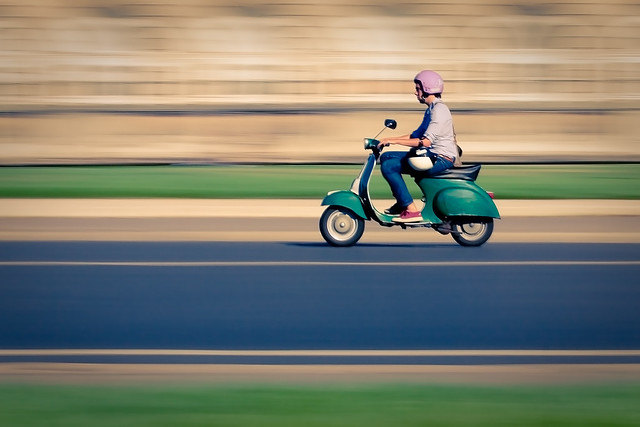
For the 'Panning' effect, you will need to use the 'Shutter Priority' mode yet again. Choose a sensible shutter speed as you will take a picture of someone running past or another example of some kind of movement whilst you 'pan' the camera to get the effect. 

Examples of 'Panning'

Own image 

Friday, 19 September 2014

Composition


Rule of Thirds

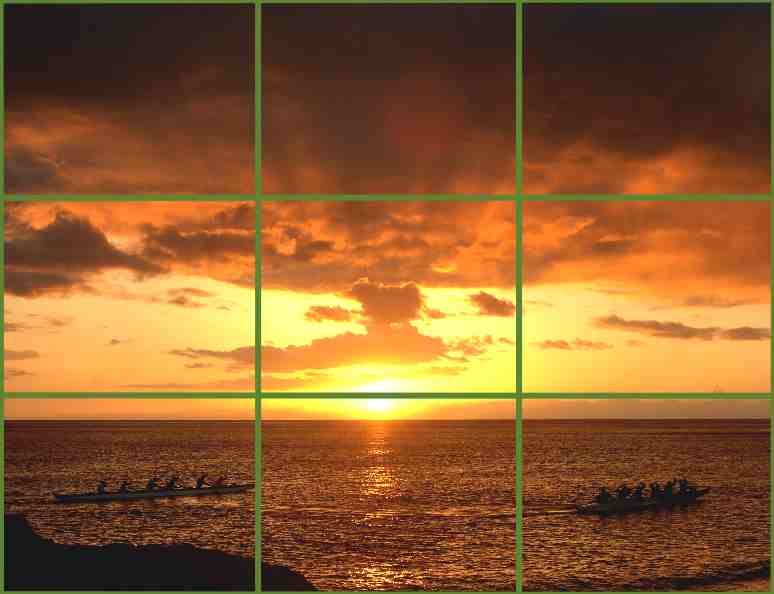
The most 'well' known principle of photographic composition is the ‘Rule of Thirds‘. The 'rule' is to break the image down into thirds, both horizontally and vertically so you have nine parts. 

When taking a photograph with the rule of thirds in mind, it’s always best to compose the photograph in the camera. This is so that you can avoid cropping later to retain as much of the image as possible. 
This image shows the 'rule of thirds' as it is split down into thirds.


Triangles


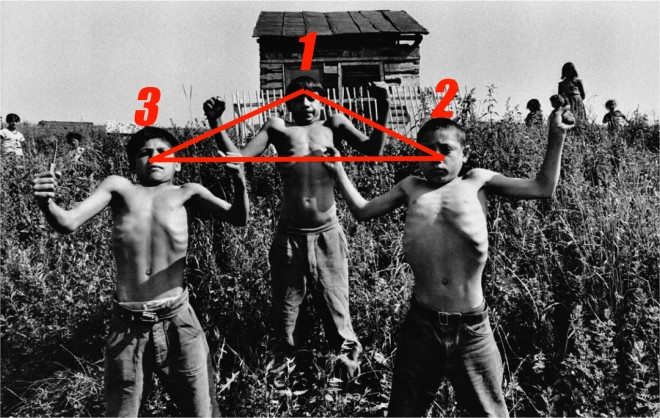
Triangles are in almost everything we see, in one way or another, it’s just a case of distinguishing them and knowing what to do with them. Triangles are a good way of combining different compositional techniques such as lines and paths and using them to create a more interesting part of a photograph, but the better part about using a triangle is their ability to make a photo feel stable or unstable.


Rule of Even & Odd

The Rule of Even and Odd is a way of composing a picture, where you use either even or odd numbers to make different effects. For example, if you have three people in a picture, the attention goes to the one in the middle. If you have 6, the attention may be more scattered between all the people.


Leading Lines

Leading lines are lines within an image that leads the eye to another point in the image, or sometimes, out of the image. Anything with a definite line can be a leading line. Fences, bridges, even a shoreline can lead the eye.

Leading lines have different photo compositional effects, depending on their position

and direction. Horizontal leading lines make feelings of restfulness and peace, while vertical leading lines evoke a sense of strength and power. Diagonal lines are more different and suggest movement.


Looking Room & Space

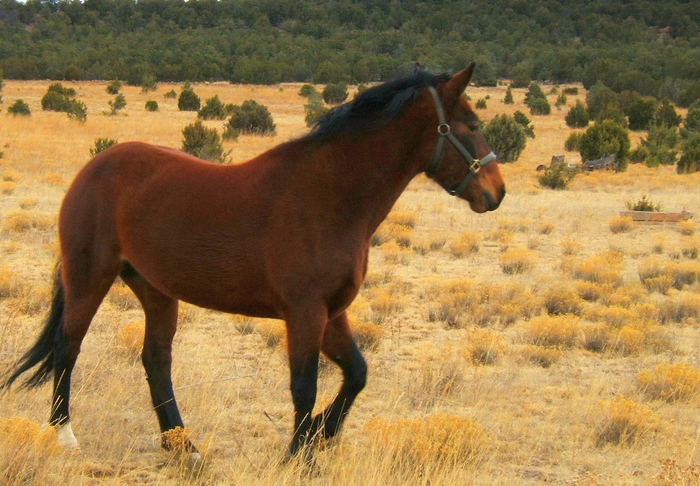
Looking room and space is composition that you either see an image of a person or animal gazing, looking far out to the distanced much as possible or just empty picture that catches your attention well. 


Styles of Photography


Fashion Photography 

Fashion photography is a genre of photography dedicated to show clothing and other fashion items. Fashion photography is usually for advertisements or fashion magazines such as Vogue, Vanity Fair, or Elle.

Fashion photography involves taking pictures of models wearing the latest clothes, accessories, hairstyles and make-up. Pictures may also be of fashion accessories. The photographs are used in a all sorts of media, including books, reports, advertisements and catalogues. This kind of photography is taken in studios, and sometimes outdoors. 

Some Photographers in the Fashion Industry that I like quite well are Bruce Weber, Alexi Lubomirski and Craig McDean. 
These Photographers mostly advertise for fashion magazines. For example, Vogue. 

Photographers of Vogue (covers)

Vogue is a globally recognised fashion and lifestyle magazine that is published monthly in 23 different national and regional editions by Condé Nast    

The Fashion Photographers that I have chosen all have taken photographs for 'VOGUE'. The three of them have different unique's to their photos. For example, Craig McDean, his photographs come across more 'retro', 'vintage' and different in most of his work.      

Alexi Lubomirski 
Bruce Weber


Craig McDean


Light Painting

Light photography is the one of the most interesting, fun photography that you could do. 
Light painting is a photograph technique in which exposures are made by moving a hand-held light source or by moving the camera.
The Artist who is taking the image will open the shutter of the camera for an extended time.

To do light painting, you'll need 'shutter speed' as it sets how long time the light (image reflected) will be entering the lens and projecting onto the sensor. 
You'll need a dark set to do light photography as to avoid light from getting in the way of your shot. It'll be easier and better to do photographing at night or blocking all the light around you. 
Also, you will need the right bulb settings. For example, Bulb (“B” setting on camera) lets your camera to keep the shutter open endlessly. When the shutter release button is pressed, the shutter opens and stays open until the shutter release button is pressed again. 

Here are some examples of 'light painting'


Bokeh Photography

In photographybokeh is the creative quality of the blur made in the out-of-focus parts of an image formed by a lens. “Bokeh” is a Japanese word, which means blur or aesthetic beauty of blur.  

Bokeh is one of the most popular subjects in Photography. The reason on why it is so popular is because Bokeh makes photographs visually appealing, making you focus on one spot in particular of the image. 


Here are some examples of 'Brokeh'


Street Photography
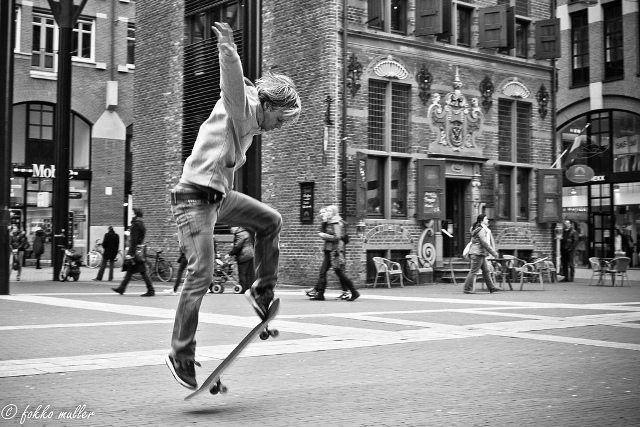
Street photography is capturing people and places. For example, street photography can be defined as un-posed, un-staged photography. Street photography usually captures, explores and questions society and the relationship between one another and their surroundings. 
All street photography doesn't need to involve people, although most of the time it does. 
Street photography is when something you have captured is unplanned with a lack of 'pior arrangement'. Pre-planned public events don't have the same feeling as the un-planned being captured as it comes across more real to street photography and it's genre.
Here are some examples of 'street photohgraphy'